
Banana Ripening Rooms — ethylene-controlled chambers for colour, brix, and shelf life
Pressure-tight ripening rooms with controlled ethylene exposure, stepped temperature cycling, and humidity management — engineered for Pakistani importers who need reliable Stage 4 colour development on schedule.
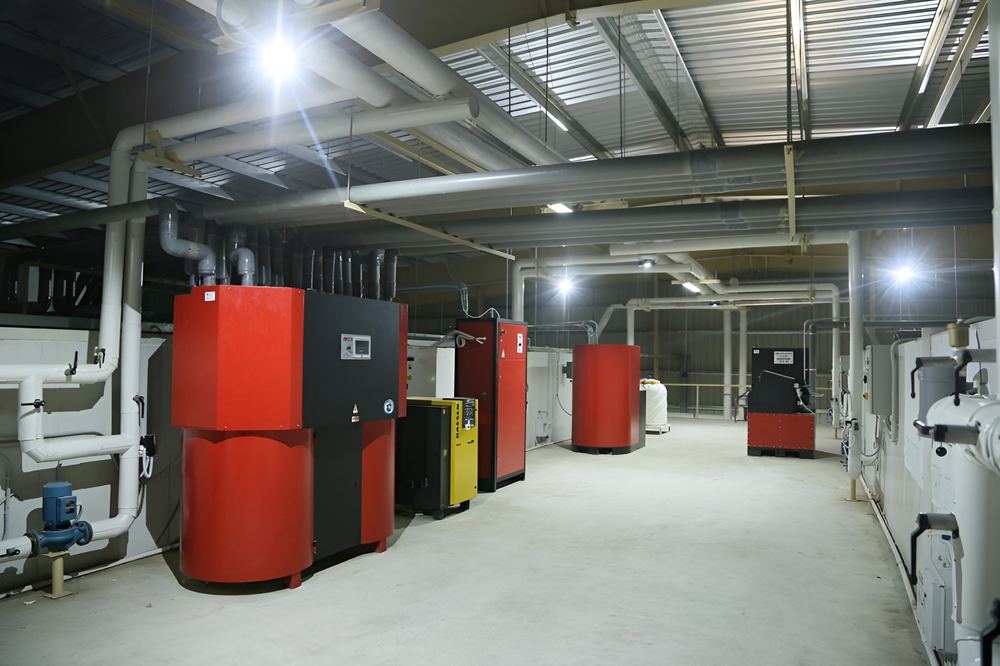
Bananas are climacteric fruit — they continue to ripen after harvest, triggered by exposure to the plant hormone ethylene. The commercial banana cold chain is built around this fact: green bananas are imported, held in storage, and then brought to retail-ready ripeness in dedicated banana ripening rooms through a precisely-controlled exposure to ethylene combined with stepped temperature and humidity cycling. Pakistan imports most of its banana supply (Cavendish from Ecuador, Philippines, and India), making banana ripening rooms a critical piece of fresh-fruit infrastructure — particularly for Karachi-based importers serving the national distribution network.
The four-day commercial ripening cycle
Standard banana ripening protocols use stepped temperature cycling over 4–6 days. The exact setpoints vary by cultivar and target stage, but a typical Pakistani Cavendish 5-day protocol looks like this:
| Day | Temperature | RH | Ethylene | Stage |
|---|---|---|---|---|
| Day 0 (loading) | +14 °C | 90% | Off | Green, hard |
| Day 1 (initiation) | +15 → +16 °C | 90–95% | 100–150 ppm × 24 h | Initiation |
| Day 2 | +15 → +17 °C | 90–95% | Off, vent | Green-yellow break |
| Day 3 | +14 → +16 °C | 85–90% | Off | Yellow with green tips |
| Day 4 (colour) | +13 → +15 °C | 85% | Off | Stage 4 (yellow) |
| Day 5+ (hold) | +13 °C | 85% | Off | Retail-ready |
Each transition is controlled by the room, not assumed. Generic cold storage cannot perform this protocol — temperature wouldn't cycle correctly, ethylene would dissipate, and humidity wouldn't track. A purpose-built ripening room is fundamentally different equipment.
Why ripening rooms are different from cold storage
Five engineering distinctions separate a banana ripening room from a generic cold store:
1. Pressure-tight construction
Ethylene is delivered at 100–150 ppm into the room. If the room leaks, the gas concentration drops and ripening initiation fails. Our ripening rooms use panel-to-panel sealing tested to gas-tight standard — closer to a CA store than a cold store. Penetrations are sealed with materials rated for ethylene exposure.
2. Stepped temperature programming
The control system must execute a multi-day programme with day-by-day setpoints, not hold a single temperature. Modern PLC-based controllers handle this; older thermostats cannot.
3. Controlled ethylene delivery
Ethylene cylinders with regulated flow, manifold to room volume, integrated into the control sequence. Safety: ethylene is flammable at concentrations above 2.7% in air — far above the 100–150 ppm working concentration, but the gas-handling protocols still apply.
4. Active CO₂ purging / venting
Bananas produce significant CO₂ during ripening. Without active venting, CO₂ accumulates and slows the process. Our rooms include automated vent cycling on Day 2 and beyond.
5. Humidity control with active humidification
Ripening protocols target 85–95% RH. Without humidification, moisture loss from the bananas dries the room (and the bananas) and degrades the cycle. We integrate fogging humidifiers tied to room RH sensors.
Capacity sizing
Banana ripening rooms are sized by tonnes per cycle, with cycle length 4–6 days. Most Pakistani importers run multiple rooms in parallel and stagger their cycles to provide continuous daily output of ripe fruit.
| Room size | Tonnes per cycle | Daily output (5-day stagger) |
|---|---|---|
| 50 m³ | ~5 t | 5 t/day from 5 rooms staggered |
| 100 m³ | ~10 t | 10 t/day from 5 rooms staggered |
| 200 m³ | ~20 t | 20 t/day from 5 rooms staggered |
| 500 m³ | ~50 t | 50 t/day from 5 rooms staggered |
Pakistani banana ripening — Karachi context
Pakistan's banana market is dominated by imported Cavendish bananas arriving via Karachi port from Ecuador, the Philippines, and India. Once unloaded as green-stage fruit, bananas need to be ripened locally to Stage 4 colour for retail distribution. Karachi-based banana importers typically run 4–8 ripening rooms in parallel, with output feeding distribution networks across the country. Smaller regional operators handle the last-mile from Karachi to interior cities, sometimes with secondary ripening rooms in Lahore, Islamabad, or major regional distribution hubs.
Frequently asked questions
What temperature do bananas ripen at?
Banana ripening uses stepped temperature cycling. Day 1 (initiation): +14 to +16 °C with 100–150 ppm ethylene. Day 2: +15 to +17 °C as ripening progresses. Day 3: +14 to +16 °C, ethylene off. Day 4 (colour development): +13 to +15 °C. Post-ripening hold: +13 °C until distribution. Exact setpoints vary by cultivar (Cavendish dominates Pakistani market) and target colour stage.
Why do bananas need a separate ripening room?
Bananas are climacteric fruit — they continue ripening after harvest if exposed to ethylene gas. A ripening room delivers controlled ethylene, controlled temperature cycling, controlled humidity, and pressure-tight construction so gas concentration stays consistent. Generic cold storage cannot do this — gas would dissipate and temperature would not cycle correctly.
How long does banana ripening take?
A standard commercial ripening cycle takes 4–6 days from green-stage banana to retail-ready Stage 4 colour. Faster ripening (3 days) is possible at higher temperatures but produces shorter shelf life. Slower ripening (7 days) extends shelf life. Most Pakistani importers run 5-day cycles.
What ethylene concentration is used in banana ripening?
Initiation ethylene concentration is 100–150 ppm, applied for 24 hours at the start of the cycle. After initiation, ethylene is purged and ripening continues from internal product ethylene production. Ethylene is delivered from cylinders with controlled-flow regulators; operator safety protocols apply because ethylene is flammable above 2.7% concentration in air.
How big is a typical banana ripening room?
Typical Pakistani banana ripening rooms range from 50 m³ (small distributor, ~5 t per cycle) to 500 m³ (large importer, ~50 t per cycle). Karachi-based banana importers often build multiple rooms in parallel to stagger cycles and provide continuous output.
Can existing cold storage be converted to banana ripening?
Sometimes, but the room needs to be effectively gas-tight (most cold rooms are not), temperature controls need to support stepped cycling rather than a fixed setpoint, and the ethylene delivery/scrubbing infrastructure must be added. Often it's more cost-effective to build a purpose-designed ripening room than to convert.
Get a cost band for your banana ripening rooms in 10 seconds.
World's first intelligent cold store cost calculator. Pakistan-tuned across 12 cities and 24 commodities.
Open the cost calculator →