
Cold Storage for Fruits & Vegetables in Pakistan — designed around the crop, not a catalogue
Mango pre-coolers, kinnow storage, potato long-storage, onion warehouses, and apple CA stores — engineered against USDA Handbook 66 setpoints and Pakistani harvest economics.
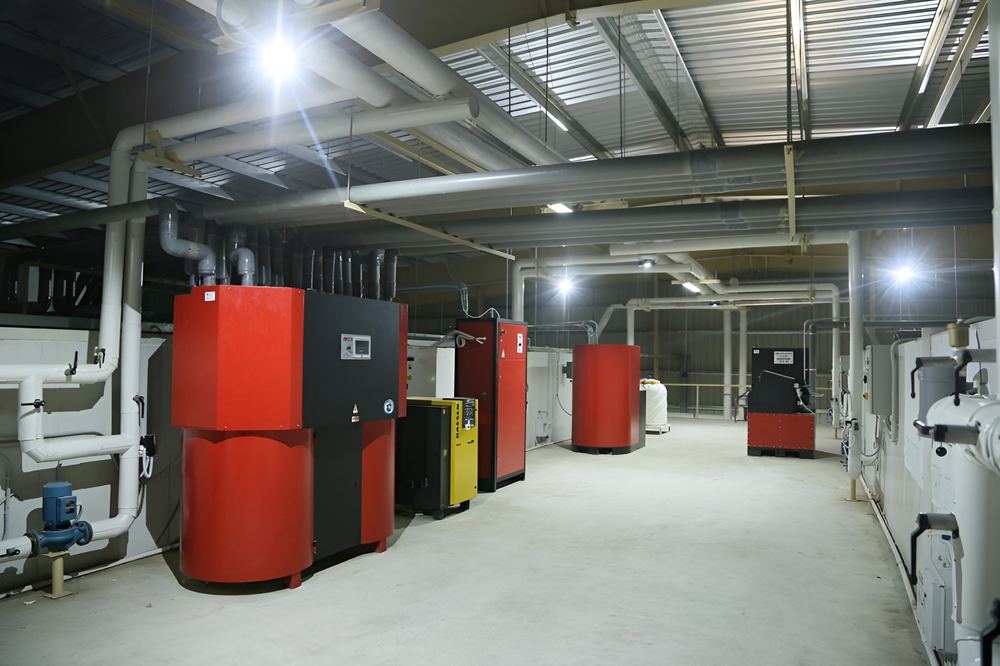
Fruit and vegetable cold storage is the most heterogeneous category in cold-chain engineering. Every commodity has its own optimum temperature, humidity, ethylene sensitivity, and shelf-life curve — and a "one-size cold room" approach loses 20–40% of the available shelf life that proper specification could buy. This page covers the major Pakistani crop categories, the engineering choices each demands, and the CA-store option for premium long-storage applications.
Why "one-size cold storage" fails for produce
Compare two crops both grown widely in Pakistan: onion wants 0 to +2 °C at 65–75% relative humidity (notably dry); potato wants +4 to +8 °C at 95% humidity (notably wet). Put them in the same room and either the onion sprouts and rots from excess moisture, or the potato dehydrates and sweetens from excess dryness. The two crops can share a building, but they cannot share a room.
The same logic applies across the fruit categories. Apples and bananas both like cool temperatures, but apples want 0 °C while bananas (post-ripening) want +13 °C — a 13-degree gap that's never bridgeable in a single room. Mango ripens; citrus doesn't. Tomatoes are chilling-sensitive below +12 °C; potatoes are chilling-sensitive below +4 °C.
Reference data for proper specification comes from two authoritative sources: USDA Agriculture Handbook 66 (the comprehensive reference on commercial storage of fruits, vegetables, and florist and nursery stocks) and ASHRAE Refrigeration Handbook Chapter 21 (Commodity Storage Requirements). Both inform every Izhar Foster fruit/vegetable cold-room specification.
Crop-specific storage requirements — Pakistani priorities
| Crop | Temp | RH | Shelf life | Notes |
|---|---|---|---|---|
| Mango (post-pre-cool) | +13 °C | 90% | 2–4 weeks | Chilling-sensitive below +12 °C |
| Kinnow / citrus | +4 °C | 90–95% | 8–12 weeks | Major Pakistani export crop |
| Apples (Pakistani) | 0 → +1 °C | 90% | 4–6 months conventional, 8–12 in CA | CA recommended for premium |
| Banana (storage) | +13 °C | 85–95% | 1–3 weeks post-ripening | Specialised ripening chamber separate |
| Dates (premium) | 0 → +4 °C | 75% | 6–12 months | CA extends further |
| Potato | +4 → +8 °C | 95% | 6–8 months | Sprout suppression critical |
| Onion | 0 → +2 °C | 65–75% | 6–9 months | Dry, well-ventilated |
| Tomato (mature green) | +13 → +15 °C | 90% | 2–3 weeks | Chilling-sensitive |
| Pomegranate | +5 °C | 90–95% | 3–4 months | CA extends to 6+ |
| Stone fruit (peaches, apricots) | 0 °C | 90–95% | 2–4 weeks | CA recommended for export |
| Leafy greens / brassicas | 0 °C | 95–98% | 1–4 weeks | High humidity essential |
| Carrots / root veg | 0 °C | 95–98% | 4–8 months | High humidity essential |
Full data set including 144 commodities is available in our downloadable Cold Storage Guide (CC-BY 4.0, free).
The three room types: pre-cool, storage, and ripening
Pre-cooling rooms
Pre-cooling removes field heat rapidly post-harvest. A mango harvested at orchard temperature (+30–35 °C in Pakistani summer) can lose half its viable shelf life within hours if not pre-cooled. Three technologies dominate:
- Forced-air pre-coolers — high-velocity cold air through palletised product. Standard for most fruits and vegetables. Typical pull-down to +4 °C in 90–180 minutes.
- Hydro-coolers — chilled water flooded over product. Used for citrus, leafy greens, and peaches. Faster than forced-air but only suitable for water-tolerant crops.
- Vacuum coolers — leafy crops in a chamber where pressure is rapidly reduced; surface water flashes to steam, removing heat. Used for premium leafy operations.
Storage rooms
Once pre-cooled, product transfers to long-term storage at its optimum band. Engineering priorities: tight temperature control, humidity tuned to crop, ethylene management (separate ethylene-producing crops like apples and bananas from ethylene-sensitive ones like leafy greens and carrots), and sufficient air circulation to prevent stratification.
Ripening rooms (banana, mango, tomato)
Ripening rooms apply controlled ethylene exposure (100–150 ppm) to bring fruit through programmed colour and texture stages. Pakistan's banana market relies heavily on ripening rooms for imported green bananas. Mango ripening is also commercially important. We cover banana ripening engineering in detail on a dedicated banana ripening rooms page.
Pre-cooling vs storage — the most common scoping mistake
Pre-cooling and storage have different sizing logic. A pre-cooler is sized by hourly throughput (kg/h of pull-down capacity); a storage room is sized by total volume held. Building a single combined room sized as storage means pre-cooling fails on throughput; building one sized as pre-cooler means storage capacity is wasted. The right answer is two rooms — and on most Pakistani projects of any scale, three rooms (pre-cool + storage + a smaller ripening or specialty room).
Export-grade cold storage
Pakistani fruit and vegetable exports are increasingly cold-chain-bound. The TDAP target of USD 5 billion in horticultural exports cannot be met without doubling certified cold-storage capacity. Export-grade specifications differ from domestic-market in five ways:
- Tighter temperature band — typically ±0.5 °C versus ±2 °C domestic
- Continuous tamper-evident temperature logging
- Redundant refrigeration (N+1)
- Validated commissioning documentation for buyer QC teams
- Reefer container handling integration for port-adjacent facilities
The capital premium for export-grade is typically 15–25%, and it pays back inside the first export season for most premium-market operators. Detail is in our cold storage and Pakistan exports piece.
CA storage — when conventional cold isn't enough
For long-storage premium crops (especially apples, dates, kinnow, pomegranates), conventional cold storage caps shelf life at 2–4 months. Controlled Atmosphere (CA) storage extends that to 8–12+ months by precisely controlling oxygen (typically 2–5%), CO₂ (1–5%), nitrogen purge, humidity, and temperature. Apples from KPK can be sold from CA storage in March, April, May — months past the conventional cold-storage window when prices are highest. See our CA stores page for full engineering detail.
Reference projects across Pakistani fruit and vegetable sectors
- Apple CA Store — KPK. 3,500 m³ controlled-atmosphere storage extending apple shelf life by 6+ months (+1 °C, 2.5% O₂).
- Date Palm CA Store — Sindh. 2,200 m³ purpose-built for premium date varieties.
- Frozen Vegetable Storage — Lahore. 3,000 m³ at −22 °C for an international export brand.
- Mango pre-coolers and storage rooms across Punjab and Sindh.
- Multiple kinnow citrus pack-house cold rooms in Sargodha and Bhalwal.
Frequently asked questions
What temperature should fruits and vegetables be stored at?
Crop-specific. Mango stores best at +13 °C with 90% RH; citrus/kinnow at +4 °C with 90–95% RH; apples at 0 to +1 °C with 90% RH; bananas (post-ripening) at +13 °C; potatoes at +4 to +8 °C with 95% RH; onions at 0 to +2 °C with 65–75% RH (notably dry). Reference data from USDA Agriculture Handbook 66 and ASHRAE Refrigeration Handbook Ch. 21.
What's the difference between pre-cooling, storage, and ripening rooms?
Pre-coolers remove field heat rapidly post-harvest (forced-air, hydro-cooling, or vacuum cooling). Storage rooms hold pre-cooled product at the crop's optimum band. Ripening rooms apply controlled ethylene with stepped temperature cycling to bring product to commercial ripeness. Each is a different room with different engineering.
How long can fruits and vegetables be stored?
Highly crop-specific. Apples: 4–6 months conventional, 8–12 months in CA. Citrus: 8–12 weeks. Mango: 2–4 weeks. Banana (post-ripening): 1–3 weeks. Potato: 6–8 months at proper temperature and humidity. Onion: 6–9 months. Detailed shelf-life data is in our downloadable cold storage guide.
Do you build cold storage for export crops?
Yes. Export-grade cold storage uses tighter specification: thicker insulation, tighter temperature band (±0.5 °C vs ±2 °C domestic), redundant refrigeration, and validated logging. We've delivered facilities for mango, kinnow citrus, dates, and apple export operations across Pakistan.
What is CA (Controlled Atmosphere) storage and which crops benefit most?
CA storage controls O₂ (typically 2–5%), CO₂ (1–5%), N₂ purge, humidity, and temperature precisely — slowing respiration far beyond what cold alone achieves. Apples (especially long-storage cultivars from KPK) benefit most, gaining 4–8 months over conventional. Dates, kinnow, pomegranates, and stone fruit also gain significantly. See our CA stores page.
Do you build banana ripening rooms in Pakistan?
Yes. Banana ripening rooms are a specialised category combining cold storage, controlled ethylene exposure, and stepped temperature cycling over 4–6 days. Full engineering details on our banana ripening rooms page.
Get a cost band for your fruit & vegetable cold storage in 10 seconds.
World's first intelligent cold store cost calculator. Pakistan-tuned across 12 cities and 24 commodities.
Open the cost calculator →