
The component that decides whether your cold room actually stays cold.
Sliding, hinged, and high-speed insulated doors with FireSafe PIR cores, multi-stage gasket sealing, and Hörmann high-speed hardware — engineered to match the cold room they protect. Manufactured at our Lahore plant since 1959 alongside Pakistan's largest cold-store and PIR-panel production.
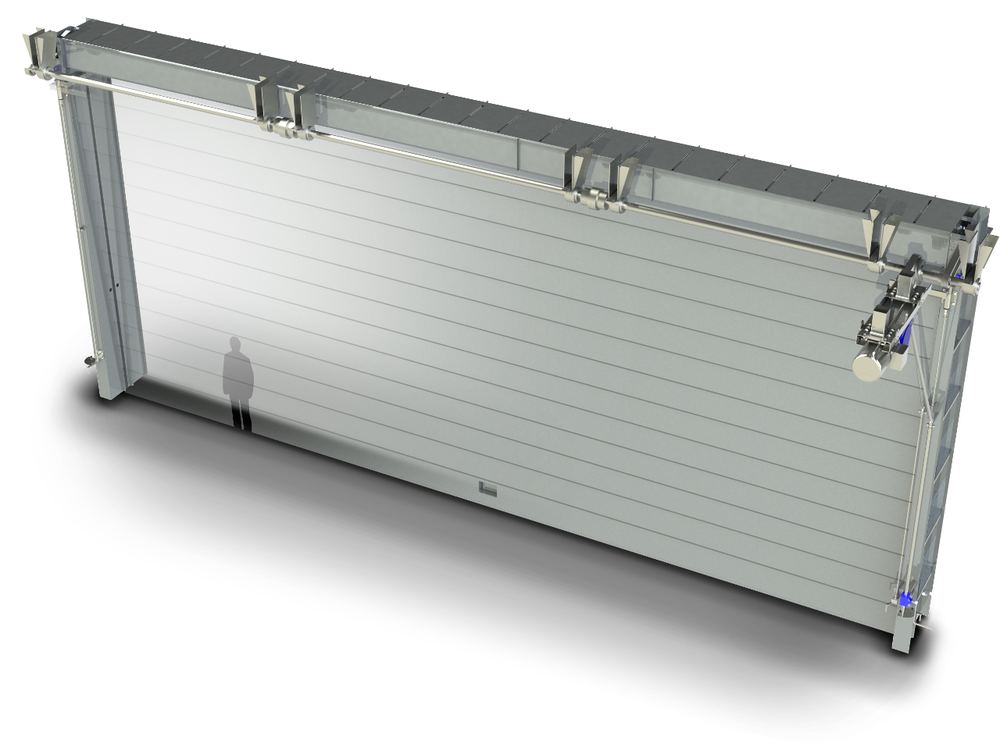
The cold-room door is the single most overlooked component in any cold facility — and the one that quietly determines whether your energy budget is reasonable or ruinous. Specify it well and the rest of the system runs as designed; specify it poorly and you'll fight frost, gasket failures, and creeping energy waste for years.
Door types we deliver
Sliding insulated doors
The standard for main openings of cold rooms and freezers. Available with manual or motorised operation, multi-stage gasket sealing, heated frames for sub-zero applications, and PIR cores matched to the room thickness.
Hinged insulated doors
For low-traffic personnel access points where sliding-door real estate isn't justified. Robust gasket systems and weight-balanced hinges for long service life.
High-speed insulated doors
For openings where forklifts and stock move continuously. Fast cycle times minimise air loss and protect adjacent product temperatures.
Special-application doors
CA store gas-tight doors. Heavy-duty blast freezer doors. Hygiene-grade pharma doors. We engineer these around your specific room and process.
What separates a good door from a cheap door
- PIR core thickness matched to room temperature (not undersized to save cost)
- Multi-stage gasket systems instead of single-edge seals
- Heated frames on freezer applications below −20°C to prevent ice build-up
- Industrial hardware rated for actual cycle counts on your site
- Floor sealing and threshold detail engineered with the slab
Where insulated doors are used.
Each application has different temperature, hygiene, and compliance demands. We've delivered for all of them.
Cold rooms
Sliding doors as standard primary access
Freezer rooms
Heated-frame sliding doors with thicker cores
Loading docks
High-speed doors for high-traffic logistics
CA stores
Gas-tight doors with pressure-rated seals
Pharma
Hygiene-finished doors with validated gaskets
Industrial
Heavy-duty doors for blast freezers
Insulated Doors — questions buyers ask.
The technical and commercial questions we hear most often before a contract is signed.
01Why specify heated frames on freezer doors?
02Manual or motorised cold store doors?
03Can you replace existing cold store doors?
04How thick should an insulated door be?
05What is the difference between sliding and hinged cold store doors?
06What is a hermetic pharma door and when is it needed?
07How long do insulated cold store doors last?
Want a rough cost estimate? Sales-engineer tool, ±20% band.
Sales-engineer tool that combines sizing with cost output. Editable Izhar margin line. Pakistan-tuned across 12 cities and 24 commodities. Door count and cost vary by site and by zone — see how doors fit into the total.
Open the rough estimator →