
Dairy Cold Storage Pakistan — bulk milk reception to finished-goods freezer
From rapid milk chilling at the silo through yogurt fermentation, cheese ripening, and ice cream hardening tunnels — engineered for CIP cleanliness, heat-recovery economics, and the throughput peaks Pakistani dairies actually run.
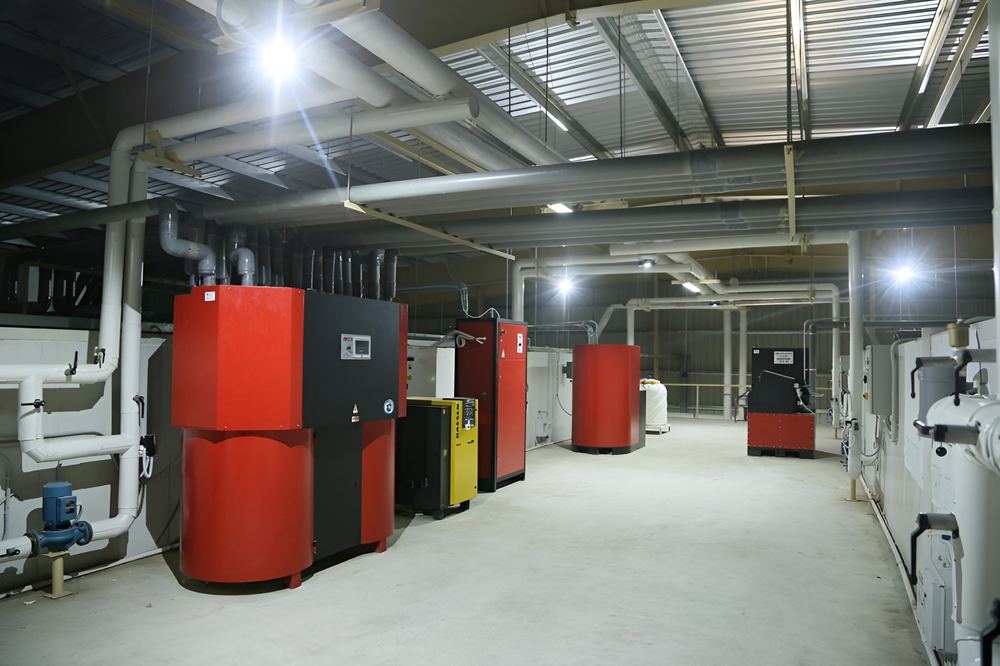
The Pakistani dairy industry runs on cold chain. From the moment raw milk leaves the cow at +30 °C to the moment finished yogurt, cheese, butter, or ice cream reaches retail, every degree drift costs shelf life, quality, or food-safety margin. This page covers the temperature-controlled rooms a complete dairy operation needs, the engineering choices each demands, and where heat-recovery economics make the cold chain pay for itself.
The dairy cold chain — five room types
| Stage | Temp | Engineering note |
|---|---|---|
| Bulk milk reception silo | +2 → +4 °C | Plate-cooler chills inbound milk from +30 °C to +4 °C in minutes; jacketed silo holds at +4 °C with gentle agitation |
| Processing buffer chiller | +2 → +6 °C | Holds processed milk between pasteurisation/standardisation steps |
| Yogurt fermentation room | +42 → +45 °C | Active fermentation at controlled temperature and humidity |
| Cheese ripening room | +8 → +14 °C | RH 75–95% (cheese-style dependent), sometimes weeks of dwell |
| Finished-goods chiller | +2 → +6 °C | Yogurt, fresh cream, fresh cheese, butter cold-chain hold |
| Ice cream hardening tunnel | −35 °C air | Brings filled ice cream from soft-serve to hardened core in 30–90 min |
| Ice cream frozen storage | −22 → −25 °C | Long-term hold of finished ice cream |
Bulk milk reception — where dairy cold chain begins
Raw milk leaves the cow at body temperature (~+30 to +35 °C). Bacterial growth doubles roughly every 20 minutes at that temperature. The single highest-leverage move in any dairy cold chain is rapid chilling at receipt: a plate-cooler heat exchanger drops inbound milk from +30 °C to +4 °C in minutes, after which a jacketed bulk silo holds at +4 °C with gentle continuous agitation to prevent fat separation.
Engineering priorities for bulk milk reception:
- Plate-cooler capacity sized to peak inbound rate — typically 1.5× average to absorb morning collection peaks.
- Silo refrigeration with redundancy — milk loss from a silo failure is non-recoverable.
- CIP-compatible silo construction — sanitisation between batches is non-negotiable.
- Sample-port access for quality control without breaking cold chain.
- Variable agitation — too gentle and fat separates; too aggressive and air entrainment damages quality.
For Pakistani dairy projects, we sized the 2,400 m³ Bulk Milk Cold Storage in Punjab around peak twice-daily collection volumes from contracted farms, with refrigeration capacity sized for full hot-load on each receipt cycle.
Yogurt fermentation and cheese ripening — different rooms, different physics
Yogurt and cheese both ferment, but the engineering of their rooms differs materially.
Yogurt fermentation
Active fermentation runs at +42 to +45 °C for 4–8 hours, depending on culture and target acidity. The room provides controlled warm conditions; the product itself generates additional heat as fermentation proceeds. After fermentation, product immediately transfers to chilled storage at +2 to +6 °C to halt acidification at the target pH.
Cheese ripening
Cheese ripening rooms run at +8 to +14 °C with controlled humidity — and "controlled" is the key word. Cheddar wants 90–95% RH; harder cheeses lower; some specialty cheeses much higher with mould-rind cycling. Dwell is measured in weeks or months. Pakistani cheese production is currently limited but growing; we've engineered ripening rooms for both cheddar-style and specialty cheese applications.
Ice cream — the sub-zero end of dairy
Ice cream presents a different engineering challenge: the product itself must reach a very specific sub-zero state to deliver the correct mouthfeel and shelf life. Three rooms typically work in sequence:
- Mix tank chiller at +2 to +4 °C — soft-serve mix held before continuous freezer.
- Hardening tunnel at −35 °C air — brings filled product from the continuous freezer (~−5 °C) down to a hardened core in 30–90 minutes.
- Frozen storage at −22 to −25 °C — long-term hold.
Pakistani ice cream demand has grown sharply in recent years. Hardening-tunnel sizing is throughput-driven (units per hour) rather than volumetric. Frozen storage is sized by inventory turn — typical operations target 14–28 days of inventory.
Heat recovery — where dairy cold chain pays for itself
A typical dairy plant has two opposing thermal loads: refrigeration (rejecting heat from cold rooms and processes) and hot water (CIP, sanitisation, processing). Without heat recovery, both run independently — refrigeration dumps heat to ambient, while a parallel boiler or heater runs to make hot water. Capture the refrigeration reject heat via desuperheater or full condenser bypass, route it to hot-water tanks, and you eliminate the parallel hot-water boiler load on most days.
On Pakistani dairy retrofits where we've added heat recovery to existing refrigeration plants, the typical observed outcome is 40–70% reduction in hot-water boiler runtime. Capital payback on the heat-recovery loop is usually inside 18 months. We unpack the engineering in our green refrigeration piece.
CIP-friendly construction
Dairy cold rooms are subject to regular CIP (Clean-In-Place) cycles and direct wash-down. Our standard dairy cold room specification includes:
- Food-grade panel facers (steel with food-grade coating, or stainless on critical surfaces)
- Coved transitions at all panel-to-floor and panel-to-ceiling joints
- Sloped floors with sealed drains and drain-trap arrangements
- Sealed wall and ceiling penetrations
- IP-rated electrical components (lights, fans, sensors, controls) for direct wash-down
- Door gaskets selected for repeated wash-down without degradation
Reference projects
- Bulk Milk Cold Storage — Punjab. 2,400 m³ at +2/+4 °C for raw milk reception and short-term storage at a leading dairy processor.
- Multiple finished-goods chiller rooms for Nestlé Pakistan, Engro Foods, Fauji Foods, and Olper's plants across Punjab and Sindh.
- Ice cream hardening and storage capacity for Pakistani ice cream brands across multiple sites.
Frequently asked questions
What temperature is bulk milk stored at on dairy receiving lines?
Bulk milk reception in Pakistan runs +2 to +4 °C in jacketed silos with continuous gentle agitation. Inbound milk is rapidly chilled from +30 to +35 °C farm temperature down to +4 °C within minutes via plate-cooler heat exchangers, then held at +4 °C for short-term storage before processing.
What temperature does ice cream need to be stored at?
Finished ice cream stores at −22 to −25 °C in frozen storage. Hardening tunnels (the post-fill freezing step) typically run −35 °C air to bring ice cream cores down rapidly. Soft-serve mix is held at +2 to +4 °C until dispense.
How does dairy heat recovery work?
Refrigeration condensers reject heat that would otherwise be dumped to ambient. Capturing this heat via desuperheater or full condenser bypass and using it for hot water (CIP, process cleaning, sanitisation) eliminates a parallel boiler/heater load. On a typical dairy site, this cuts hot-water boiler runtime by 40–70%.
Are your dairy cold rooms CIP-friendly?
Yes. Dairy cold rooms designed for CIP (Clean-In-Place) operations have stainless or high-grade coated finishes, sealed wall-floor coving, sloped floors with adequate drainage, and sealed penetrations. Where rooms are subject to direct CIP wash-down, we specify food-grade construction throughout.
What capacity do typical Pakistani dairy cold storage rooms run at?
Pakistani dairy cold storage ranges from 200 m³ for small dairies up to 5,000+ m³ for major processors like Nestlé, Engro Foods, and Olper's. We've delivered the 2,400 m³ Bulk Milk Cold Storage in Punjab and multiple finished-goods storage rooms across the country.
Can you handle yogurt fermentation rooms?
Yes. Yogurt fermentation rooms operate at +42 to +45 °C with controlled humidity for the active fermentation phase, then transfer product to chiller storage. Cheese ripening rooms are different — typically +8 to +14 °C with controlled humidity (75–95% depending on cheese style), often for several weeks.
Get a cost band for your dairy cold storage in 10 seconds.
World's first intelligent cold store cost calculator. Pakistan-tuned across 12 cities and 24 commodities.
Open the cost calculator →