
Potato & Onion Cold Storage in Pakistan — long-storage rooms tuned per crop
Two crops, two rooms, two completely different engineering specifications. Punjab's potato belt and Sindh's onion-growing districts both rely on long-storage cold rooms to bridge harvest glut and shortage windows — and the operators who run rooms tuned per crop see materially better commercial outcomes.
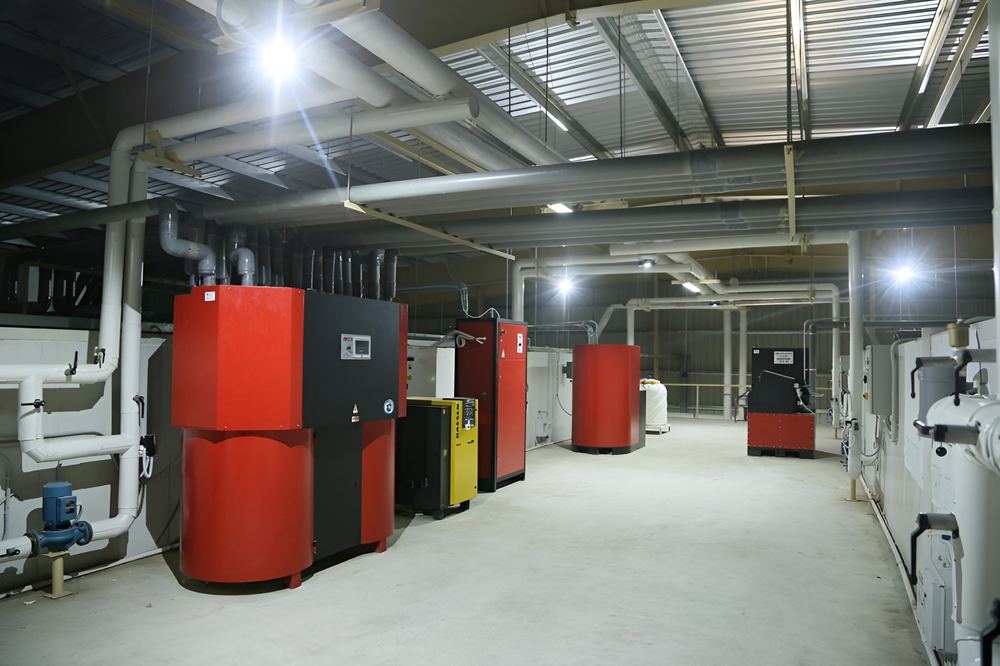
Potato and onion long-storage is the workhorse of Pakistani agricultural cold chain. Both crops have well-developed harvest seasons (potato: November–February for table stock, with secondary spring crop; onion: November–April peaking January–February). Both face dramatic seasonal price spreads — harvest-window glut to mid-year shortage. Cold storage that holds the crop through that arbitrage window is one of the most economically rational investments a Pakistani agri-trader or grower can make. The catch: potato and onion need fundamentally different rooms, and trying to share infrastructure means commercial losses.
Two crops, opposite humidity
The single biggest engineering distinction between potato and onion storage is humidity:
| Parameter | Potato (table stock) | Potato (processing) | Onion |
|---|---|---|---|
| Temperature | +4 → +6 °C | +8 → +10 °C | 0 → +2 °C |
| Humidity | 95% RH (very humid) | 95% RH (very humid) | 65–75% RH (notably dry) |
| Light | Dark (greening prevention) | Dark | Dark |
| Ventilation | Moderate, controlled | Moderate, controlled | Strong, continuous |
| Hold time | 6–8 months | 8–10 months | 6–9 months |
| Sprout suppression | Temperature + chemistry | Temperature + chemistry | Cool + dry combination |
Potato storage engineering
Temperature window
Table-stock potatoes (for direct retail sale or peeling/cutting at point of use) store at +4 to +6 °C. Processing potatoes destined for chips, crisps, and frozen-fries store at a slightly warmer +8 to +10 °C to prevent cold-induced sweetening — at lower temperatures, potatoes convert starches to sugars, which produce dark fries when they hit the fryer. Temperature window is the single most important spec line for processing-grade storage.
Very high humidity
95% relative humidity is non-negotiable for potato storage. Below 90%, potatoes lose weight and shrivel; above 98%, mould develops. Achieving 95% RH consistently across a large room requires either active humidification (atomising or fogging humidifiers integrated into the air-handling unit) or careful refrigeration design that minimises moisture removal at the evaporator coil.
Sprout suppression
Even at +4 °C, potatoes will eventually sprout. Three approaches:
- Temperature alone at +3 °C delays sprouting significantly but doesn't suit processing applications
- CIPC (chlorpropham) — the historical standard, now restricted in EU markets and some other jurisdictions
- Alternatives — 1,4-DMN (DMN-Lock), 1,4-Sight (orange-oil derivative), ethylene, mint oil. Pakistan operators increasingly adopt non-CIPC alternatives both for export-market compliance and worker-safety reasons
Ventilation and respiration management
Stored potatoes respire — consuming oxygen, producing CO₂ and heat. A well-designed potato store has ventilation cycling that brings fresh air through the bulk to remove CO₂ and respiration heat without dehydrating the product. The ventilation pattern — top-down or bottom-up flow — depends on the storage method (palletised vs bulk-stacked vs jute-bagged).
Onion storage engineering
Temperature window
Onions store best at 0 to +2 °C. Higher temperatures (above +5 °C) trigger sprouting and root growth; lower temperatures risk freeze damage to outer skins. The window is narrow but stable.
Notably dry humidity
The onion humidity spec — 65–75% RH — is what most surprises operators new to the crop. It's much drier than typical cold-storage produce. The reason: at high humidity, onions develop neck rot, basal-plate rot, and surface mould, all driven by moisture. Dry air keeps the outer skin papery and the bulb tightly closed. Achieving 65–75% RH requires:
- Strong continuous ventilation that exchanges room air faster than respiration moisture accumulates
- Refrigeration that runs cold-coil-dry rather than evaporator-flood mode
- Often, dehumidification on humid weather days during loading season
Pre-conditioning
Onions arriving from field require curing before cold storage — typically 2–3 weeks at +25 to +30 °C with strong air movement to dry the outer scale and seal the neck. Curing is usually done in field-side curing rooms or open sheds before transfer to cold storage. Skipping curing leads to neck rot losses in storage.
Why combining the two ruins both
Operators occasionally try to economise by storing potatoes and onions in the same room, often after misunderstanding how different the humidity specs are. The result is predictable:
- If the room runs at 95% RH (potato spec): onions develop neck rot and basal-plate rot. Loss rates can reach 20–40% over a 6-month hold.
- If the room runs at 70% RH (onion spec): potatoes lose 8–15% weight and develop wrinkled, dehydrated, sweetened tubers worth half their original price.
- If the room runs at intermediate 85% RH: both crops degrade, just slower.
The right answer is two rooms, sharing a refrigeration plant if scale justifies it but with separate humidity zones and ventilation systems. Capital cost differential is typically 15–25% above a single room — and pays back inside one storage season in reduced losses.
Punjab potato belt — the commercial context
Pakistan's potato production is concentrated in Punjab, particularly the Okara–Sahiwal–Pakpattan corridor and Faisalabad hinterland. Harvest peaks November–February (winter crop) with a smaller spring crop. Storage facilities are typically built by larger growers, agri-traders, or processing companies (Lays, K&N's, restaurant chains) and hold inventory through to the summer high-price window.
Onion production is more dispersed — major districts include Sindh (Hyderabad, Mirpurkhas) and Punjab (Multan area, Vehari). Harvest peaks January–April. Storage operations are smaller-scale and more dispersed than potato.
Frequently asked questions
What temperature should potatoes be stored at?
Table-stock potatoes store at +4 to +6 °C with 95% relative humidity. Processing potatoes (chip and crisp) store at +8 to +10 °C to avoid cold-induced sweetening that affects fry colour. All potato storage requires sprout suppression, very high humidity (95%), darkness, and adequate ventilation.
What temperature do onions need for long storage?
Onions store best at 0 to +2 °C with notably low humidity (65–75% RH). The combination of cool temperature and dry air suppresses sprouting, mould, and root growth. Strong ventilation is essential.
Can potatoes and onions share the same cold storage room?
No. They have fundamentally incompatible humidity requirements — potatoes want 95% RH, onions want 65–75% RH. Putting them in the same room means either onions develop mould or potatoes dehydrate and sweeten. They can share a building, but cannot share a room.
How long can potatoes be stored in commercial cold storage?
Properly-stored potatoes hold 6–8 months. Critical factors: 95% relative humidity, +4 to +8 °C depending on end-use, darkness, sprout suppression, and adequate ventilation. Punjab potato cold storage facilities routinely hold harvest-season inventory through to the following summer.
How does sprout suppression work in potato cold storage?
Three options: (1) Maintain temperature below the sprouting threshold (~+4 °C). (2) Apply CIPC chemical sprout inhibitor (now restricted in EU markets — alternatives include 1,4-DMN, ethylene, and orange-oil-derived 1,4-Sight). (3) Use natural inhibitors via stored gases. Pakistan-market facilities most commonly rely on temperature management plus alternative inhibitor chemistries.
What's the typical capacity of Pakistani potato or onion cold storage?
Pakistani potato cold storage typically ranges from 500 tonnes (small farmer storage) to 5,000+ tonnes (commercial trader operations). Onion storage typically smaller (500–2,000 tonnes) due to lower harvest volumes. The Punjab potato belt around Okara, Sahiwal, and Pakpattan accounts for much of national potato storage capacity.
Get a cost band for your potato & onion cold storage in 10 seconds.
World's first intelligent cold store cost calculator. Pakistan-tuned across 12 cities and 24 commodities.
Open the cost calculator →