
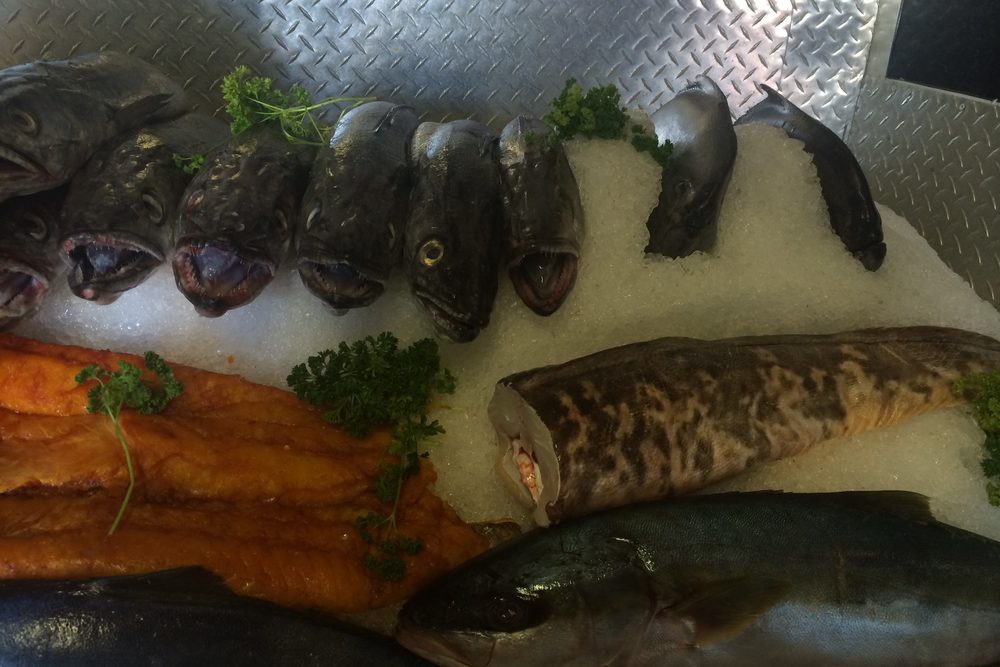
The fish you pull from the Arabian Sea is worth the most in the first hour. From that moment, the clock runs against you — and on most Pakistani boats, the only thing slowing it down is a hold full of crushed ice that started melting the instant it left the dock. By the time you reach the auction, the best of your catch has quietly slipped a grade. You still sell it. You just sell it for less. Every single trip.
The ice problem nobody adds up
Ice feels free because you've always bought it. But look at what it actually costs you across a season:
- It melts on the clock. A 27°C catch, a 40°C deck, salt air, and a 12-hour day — ice drains away long before you head home. The fish at the bottom of a half-melted hold is sitting in warm slush.
- It runs out. On a good day, or a long one, you simply don't have enough. The last fish caught gets the least cold.
- It costs cash every trip. Buying, hauling, and loading ice is a recurring bill that never stops — and it goes up in summer, exactly when you need the most.
- It hides the loss. Because the fish still sells, the money you leave on the table never shows up as a number. It just shows up as a lower price.
The damage isn't dramatic. It's a soft belly here, a dull eye there, flesh that gives a little when the buyer presses it. That's the difference between top grade and second grade — and second grade can be a fraction of the price. Across a month of trips, it adds up to real money walking off your boat.
Why 0–4°C is the number that pays you
Fresh fish stays fresh because it stays cold. Hold the catch close to 0°C and it stays firm, bright-eyed, and full-grade for far longer. Let it drift up toward the temperature of a hot deck and spoilage races ahead — texture softens, quality drops, and the catch heads toward the discount end of the market or, at worst, fishmeal value.
So the whole game is simple to state and hard to do with ice: get the catch cold fast, and keep it at 0–4°C until you dock. That's not a luxury. That's the single biggest lever on what your fish is worth.
We go deeper into the science and the numbers in our research piece on at-sea cold storage — but the headline is this: cold is the cheapest quality upgrade a boat can make.
Cold that goes to sea — and runs on sunshine
Instead of a hold full of melting ice, picture an insulated tank with a bank of cold built into it — frozen solid overnight at the dock, then holding that cold all day at sea. Fish goes in hot from the water and is chilled to 0–4°C and held there. No slush. No draining. No running out.
And it runs on solar. Rooftop panels and a small battery carry the load through the day, so there's no diesel generator to fuel, no fumes, and nothing to refuel mid-trip. The boat leaves the dock cold and comes home cold — on sunshine.
That's exactly what our on-board marine cold storage does. A typical small-boat system holds around 1,000 kg of catch at 0–4°C through a full fishing day, and the frozen cold banks stay frozen for days even with no power — so the boat can rest between trips and still depart cold.
How it pays for itself
- Higher grade = higher price. Firm, cold, bright fish sells at the top of the market, not the bottom.
- No more ice bill. The recurring cost of buying and loading ice disappears.
- No fuel at sea. Solar replaces the diesel genset — the cold effectively runs for free once it's installed.
- Less waste. Far less of the catch is lost to spoilage on long days and hot months.
- New markets open up. Export buyers serving the Gulf, EU, and China demand a proven cold chain. A boat that can keep fish cold can sell where a warm-hold boat can't.
Built for the sea, by people who build cold for a living
A cold system on a boat has to survive salt, vibration, heat, and the fact that there's no mechanic 40 km offshore. So every part is marine-grade from the start — salt-resistant, sealed, secured against the swell, and food-safe inside. And it's engineered to your boat: your catch volume, your trip length, your deck space, your dock.
Izhar Foster has engineered cold for Pakistan since 1959 — cold stores, refrigeration plants, and insulated buildings across the country. This is that same engineering, taken to sea for the fishermen who feed it.
If you run a boat out of Karachi, Korangi, Gwadar, Pasni, or anywhere on the Sindh and Balochistan coast — tell us about your vessel and your catch. We'll come back with a cold system designed around it, and an honest number. Request a quote or message our engineers on WhatsApp.