
Industrial & commercial cold stores — refrigeration engineered around your product, not a catalogue.
Want a cost estimate first? Get an indicative build cost for your capacity and temperature in about a minute — free, and no email required.
Izhar Foster designs and installs industrial cold storage across Pakistan from −40°C blast freezers to +25°C ambient warehouses, with capacity from 50 to 10,000 m³, built with our own FireSafe PIR panels and matched ammonia, glycol, or CDU refrigeration. Operating since 1959 from a 277,460 sqft Lahore plant. Trusted by Coca-Cola, Pepsi, Nestlé, Engro, Pakistan Army, USAID and 2,100+ other installations.
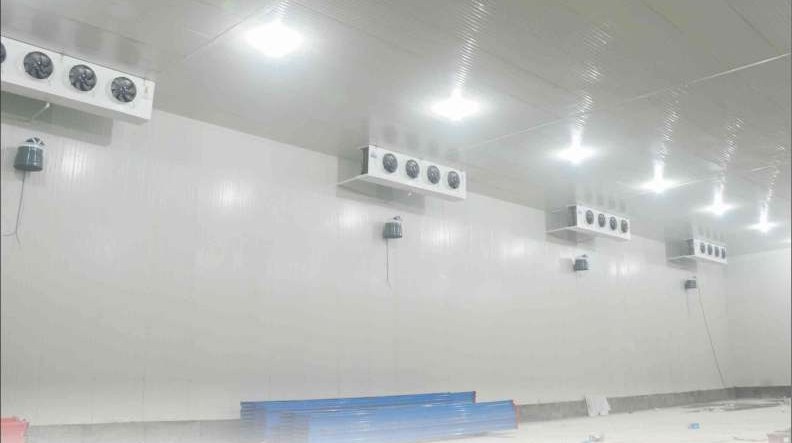
In short: Izhar Foster builds industrial and commercial refrigeration in Pakistan in three architectures — an industrial cold warehouse on an ammonia system, a commercial cold store on rack technology, or a medium-size cold store on a CDU system. Envelope, refrigeration, doors and controls are designed, manufactured and installed as one scope from our 277,460 sq ft Multan Road plant in Lahore.
The class is set by refrigeration load, not floor area: below roughly 200 kW a CDU pack is the economical answer; 200–500 kW is rack territory; above 500 kW ammonia or ammonia-glycol wins on lifetime energy cost at Pakistan's 46–50 °C summer ambient. Operating nationwide since 1959, with 2,100+ installations delivered.
Izhar Foster is highly specialised in the production and installation of FireSafe cold stores using ozone-friendly technologies. By taking a lead in adopting "green alternatives" in the manufacture of FireSafe cold store panels and refrigeration equipment, Izhar is the only company in Pakistan capable of meeting international standards and operating globally. Whichever of the three architectures a project needs, it is designed, manufactured and installed to the same standard.
Industrial & Commercial Refrigeration
Three architectures cover the range, and the class is set by refrigeration load rather than floor area. Each has its own page:
Industrial refrigeration — ammonia and glycol systems
Screw or piston compressors on ammonia (NH₃), R404A, R507 or CO₂, with glycol and alcohol as intermediate fluids and PLC computerised supervision. Indirect glycol-ammonia confines the charge to a compact plant room. Above roughly 500 kW. Our largest is the 3,000-ton HAC Agri design. Ammonia & glycol systems →
Commercial refrigeration — rack systems
Custom assemblies of multiple parallel-piped compressors, turnkey from −35 °C to 0 °C — 3 to 8 compressors on one frame, up to 3 suction groups, combinations to 320 hp, with air-, water- or evaporative-cooled condensers. Supplied by Heatcraft (USA). Roughly 200–500 kW. Rack systems →
Medium-size cold stores — CDU systems
Packaged condensing units, one per room or a small multi-CDU pack. Fewer interconnections mean faster commissioning and simpler on-site service — which matters where technical support is thin. Bitzer compressors and Zanotti packaged units. Under roughly 200 kW. CDU systems →
What we refrigerate
Izhar Foster has wide experience in the design and contracting of turnkey projects in refrigerated warehousing of fruit and vegetables, meat, fish, poultry, medicine, chemicals and other industries.
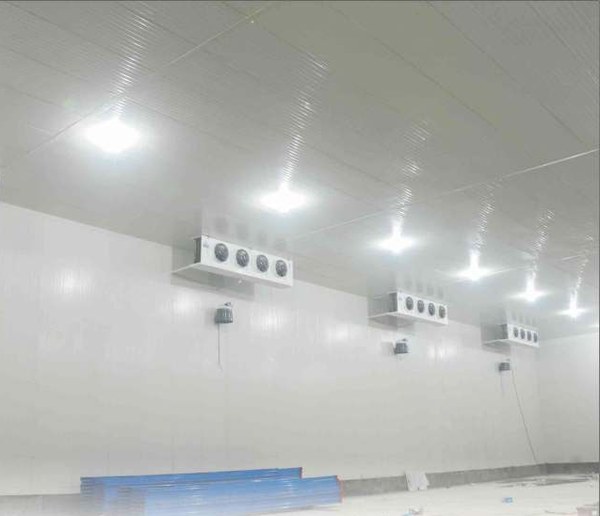
Fruit and vegetables — humidity, CO₂ and ethylene
Fruit and vegetables are properly preserved only when humidity, CO₂ and ethylene are all under control — temperature alone is not enough. Izhar Foster introduced modern CO₂ control evacuation systems, ethylene absorbers and hi-tech humidifiers to Pakistan's cold store industry. Where a crop needs full atmosphere management, the answer is a controlled atmosphere store, or at plant scale an industrial & commercial CA store.
Meat, poultry and seafood
Chicken processing, seafood storage, butcheries and slaughterhouses need highly efficient, safe installations without defrost problems. We supply equipment that maintains the best organoleptic qualities of meat, poultry and seafood — firmness, colour and flavour held through the storage cycle rather than recovered afterwards.
Ice cream, milk and yogurt
For ice cream, milk and yogurt, large quantities of cold are required for thermal treatment at low cost. For these sectors Zanotti cooling systems operate on ammonia and ecological gases, with high-yield equipment for the production of cold water — an "ice-bank" with stainless-steel tanks. Delivered at the Gourmet Ice Cream plant.
Industrial & commercial refrigeration we have built
Multi-purpose cold stores installed for logistics companies and airport facilities are designed to cater for a wide range of temperatures.
- Sharaf Logistics — a 50-foot-high racked cold store, among the tallest built in Pakistan
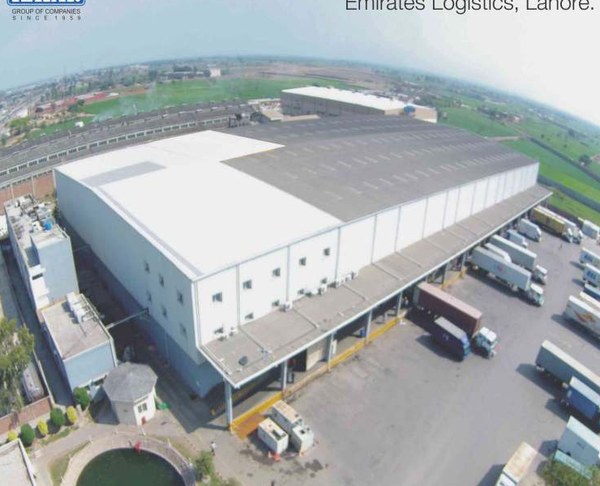
- Emirates Logistics, Lahore — multi-purpose, multi-temperature 3PL cold store
- Gourmet Ice Cream Plant — ammonia plant with ice-bank cold-water production
- Oye Hoye Chips — snack-food cold storage with racked pallet handling
- HAC Agri — 3,000-ton ammonia-glycol CA store, 20 rooms
Room types — covered on their own pages
Chillers, freezers and blast equipment each have a dedicated page rather than a duplicate summary here: walk-in cold rooms (0 to −25 °C chillers and freezers) and blast freezers and blast chillers (+70 °C → +3 °C in 90 minutes, and −40 °C air for a −18 °C core). Ambient and dry storage from +15 to +25 °C is quoted on the same scope. This page covers the refrigeration architecture that drives all of them.
Built with named equipment partners — not generic resold parts
The refrigeration plant decides whether your cold store still works in year 15. We integrate the components serious cold-chain operators specify — and stand behind the engineering that ties them together. Bitzer compressors (Germany), Heatcraft rack systems (USA), LU-VE evaporators (Italy), Zanotti packaged units and IQF (Italy), and Hörmann high-speed insulated doors (Germany). For controlled atmosphere, we partner with Fruit Control Italiana (GAC 5000 analysis, Swingtherm-BS ethylene, Intelligem IG, Fighter/Bravo/Swan PSA nitrogen). For refrigerated transport, Thermo King (USA) and Zanotti truck units. Every project also uses our own FireSafe PIR panels from the 277,460 sqft Lahore plant — λ ≈ 0.022 W/m·K, fire class B1, the only PIR (not PU) sandwich panel made in Pakistan.
Where cold stores are used.
Each application has different temperature, hygiene, and compliance demands. We've delivered for all of them.
Pharma
GMP-validated cold rooms — DRAP-compliant, IQ/OQ/PQ documentation
02+4°CDairy
Bulk milk reception, ice cream −22 °C, heat-recovery integration
03−25°CMeat & Poultry
Halal-compliant carcass chillers, blast freezers, HACCP-friendly
04+1°CFruit & Veg
Crop-specific rooms — mango, citrus, apple, tomato, leafy greens
05+4°CPotato & Onion
Long-storage rooms tuned per crop — 95% RH potato, 70% RH onion
06+14°CBanana Ripening
Ethylene-controlled chambers with 4–6 day stepped cycling
07−25°CWalk-in Rooms
Compact chillers & freezer rooms for shops, kitchens & clinics
Temperature, humidity & shelf life — for everything you'll store.
Search 144 commodities. Click any row to size a cold room for it in our load calculator — pre-filled with your product's exact temperature and humidity.
| Commodity | Storage temp °F | Relative humidity % | Approximate shelf life | |
|---|---|---|---|---|
| Loading commodity data… | ||||
No commodities match . Try a different term, or clear the filter.
Methodology & sources
Storage values are reference targets for properly pre-cooled commodities of standard variety, surface texture, and packaging. Real-world shelf life depends on harvest discipline, pre-cool, ethylene management, room loading, and door-opening frequency. Use the load calculator to size a room around your specific product, target temperature, and infiltration assumptions.
- ASHRAE 2022 Refrigeration Handbook · Ch. 21 — Commodity Storage Requirements
- USDA Agriculture Handbook 66 — Commercial Storage of Fruits, Vegetables, and Florist & Nursery Stocks
- Internal commissioning records — Izhar Foster engineering, 2018–2026
Downloads — reference assets for engineers and buyers.
The same data we use to size systems on Pakistan-scale projects, in the formats your team already works in.
Cold Stores — Product Data Sheet
Construction details, panel specs, refrigeration architecture, and standard scope of supply.
Cold Storage Guide (Temperature, Humidity & Shelf Life)
144 commodities — fruits, vegetables, dairy, meat, fish, dry goods — with optimal storage temperature, humidity, and approximate storage life.
What is spoilage costing you? When does a cold store pay back?
Tell us your commodity, throughput, and city. In 30 seconds you see (1) what you're losing in spoilage right now, (2) what a cold store costs, and (3) when it pays back. Defensible math from FAO postharvest losses + ASHRAE Ch. 24 + Pakistan tariff data. The number nobody else publishes.
Run the ROI & payback calculator → 5-question wizardThe technical questions buyers ask first.
If you're sizing a project right now, these are the answers we give every day on first calls.
01What's the smallest cold store you'll build?
02How long does installation take?
03Do you handle the civil works too?
04Voltage stabilisation and backup power?
05What cold storage temperature can you achieve?
06What is the cost of a cold store in Pakistan?
07Which refrigeration system is right for my cold store?
08Do you supply and install racking inside cold stores?
09What is the difference between industrial and commercial cold storage?
Cold storage guides from our engineers.
In-depth articles covering design, sizing, cost, and Pakistan cold-chain infrastructure.
Cold Storage Cost in Pakistan 2026 — PIR Prices, ROI
Indicative build costs, PIR panel pricing, and ROI benchmarks for chillers and blast freezers.
Cold Storage Demand in Pakistan: 2026 Market Outlook
Why cold-chain capacity is the key constraint on Pakistan's agricultural exports and food safety.
Refrigeration Systems for Pakistan's Cold Chain
NH₃, glycol-indirect, and CDU systems compared across temperature classes and load sizes.